Chicken Tandoori Samosa: The Ultimate Guide to a Flavorful Fusion Snack
Chicken Tandoori Samosa: The Ultimate Guide to a Flavorful Fusion Snack
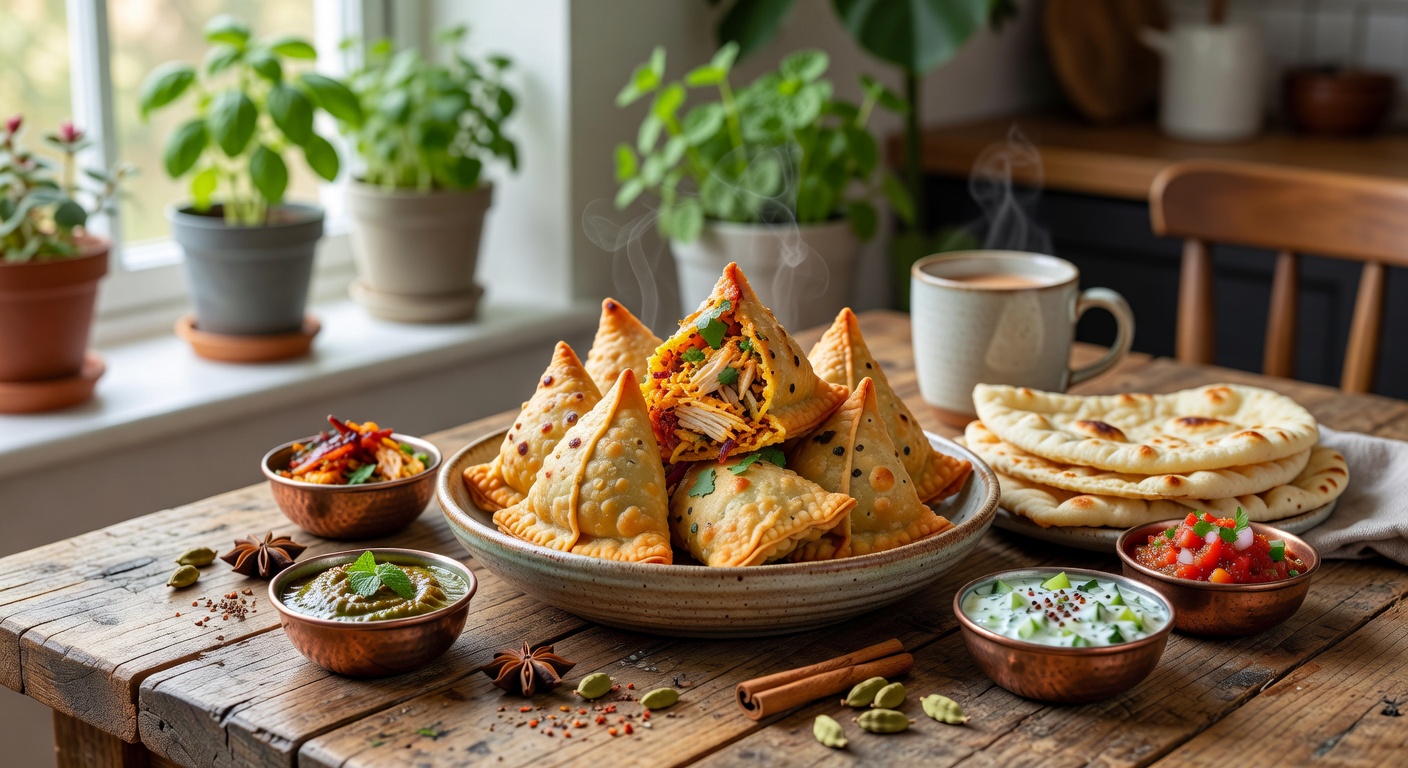
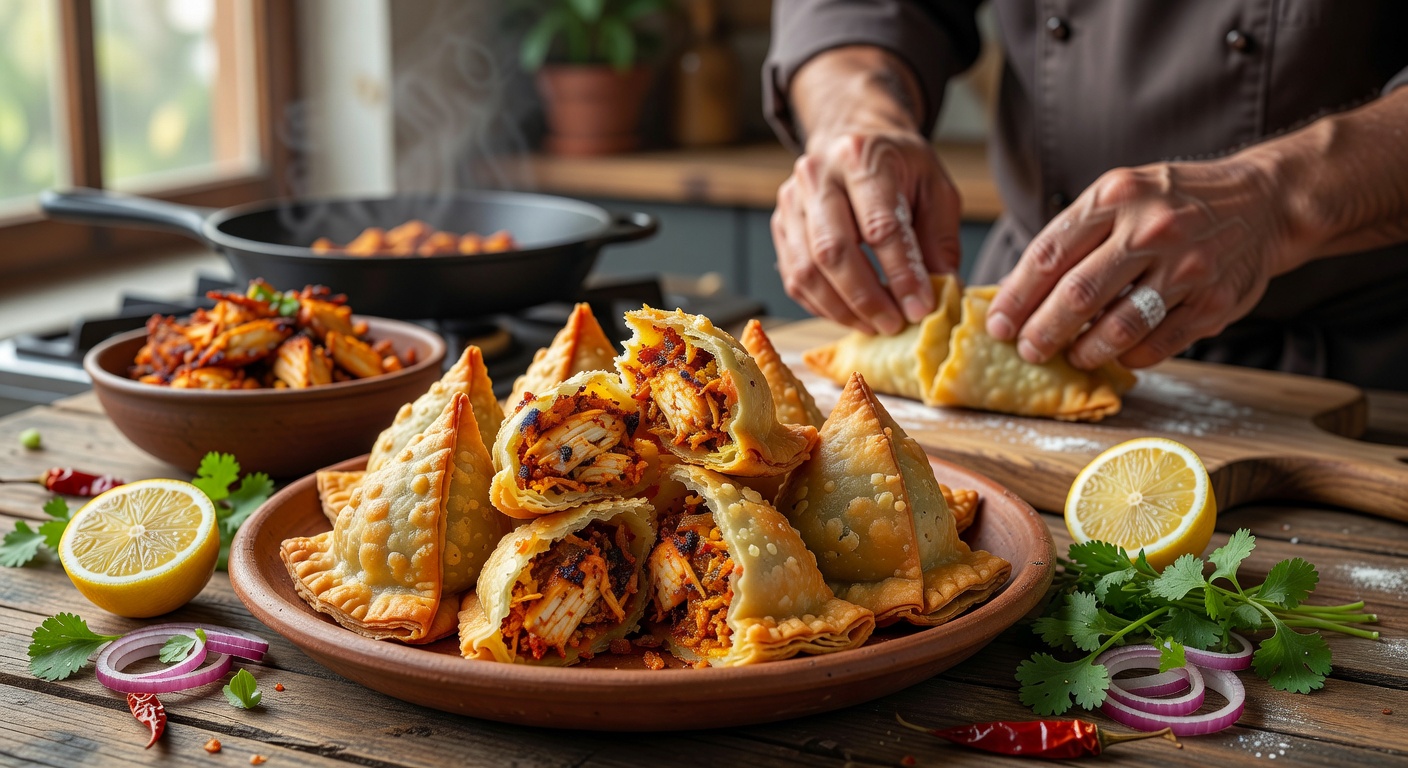
Crispy, golden samosas filled with succulent tandoori-spiced chicken and aromatic herbs. This fusion snack is perfect as an appetizer or party treat, offering a delightful crunch with every bite.
Ingredients
- For the dough: 2 cups all-purpose flour
- 1/2 teaspoon salt
- 2 tablespoons vegetable oil
- 1 egg yolk
- 1/2 cup warm water (approximately)
- For the filling: 2 tablespoons vegetable oil
- 1 medium onion, finely chopped
- 2 cloves garlic, minced
- 1 teaspoon grated ginger
- 1 pound boneless chicken thighs, cooked and shredded
- 1/2 cup plain yogurt
- 2 tablespoons tandoori masala paste
- 1 teaspoon ground cumin
- 1 teaspoon ground coriander
- 1/2 teaspoon chili powder
- 1/2 teaspoon turmeric
- 1/4 cup fresh cilantro, chopped
- Salt to taste
- For frying: vegetable oil for deep frying
Instructions
- Make the dough: In a large bowl, mix flour and salt. Add oil and egg yolk, rub into flour until it resembles breadcrumbs. Gradually add warm water, mixing until a smooth, elastic dough forms. Cover with cling film and refrigerate for 30 minutes.
- Prepare the filling: Heat oil in a pan over medium heat. Sauté onion, garlic, and ginger until soft. Add shredded chicken, yogurt, tandoori masala, cumin, coriander, chili powder, turmeric, and salt. Cook for 5-7 minutes until mixture is dry and fragrant. Stir in cilantro and let cool completely.
- Divide dough into 12 equal balls. Roll each ball into a thin circle (about 6 inches diameter). Cut each circle in half to form two semicircles.
- Fold each semicircle into a cone shape, sealing the straight edge with a little water. Fill each cone with about 1 tablespoon of filling. Seal the top edge with water to form a triangle. Repeat with remaining dough and filling.
- Heat oil in a deep pan to 350°F (175°C). Fry samosas in batches for 4-5 minutes, turning once, until golden brown and crispy. Drain on paper towels.
- Serve hot with mint chutney or tamarind sauce.
- For a baked version, brush samosas with oil and bake at 400°F (200°C) for 20-25 minutes until golden.
- Leftover tandoori chicken works perfectly; adjust seasoning as needed.
- Ensure the filling is completely cool before filling to prevent soggy dough.
- Store uncooked samosas in the freezer for up to 2 months; fry directly from frozen, adding 2-3 minutes to cooking time.
Imagine biting into a golden, crispy pastry shell that shatters to reveal a warm, aromatic filling of spiced chicken tandoori. The chicken tandoori samosa is a delightful fusion that marries the smoky, charred flavors of tandoori chicken with the classic, crunchy samosa wrapper. Whether you’re a seasoned cook or a beginner, this guide will walk you through everything you need to know.
From selecting the right chicken filling for samosas to mastering the art of folding, we cover it all. You’ll learn how to make chicken tandoori samosas from scratch, explore variations like aloo chicken samosa and chicken and jalapeno samosas, and discover tips for using frozen chicken tikka samosas when you’re short on time. Get ready to elevate your snack game with this irresistible treat.
What Is a Chicken Tandoori Samosa?
A chicken tandoori samosa is a brilliant fusion snack that marries the bold, smoky flavors of tandoori cooking with the classic, crispy pastry of a samosa. Traditionally, a samosa is a fried or baked pastry filled with savory ingredients, often potatoes and peas. The chicken tandoori samosa elevates this concept by swapping the standard chicken filling for one infused with tandoori spices—think vibrant turmeric, cumin, coriander, garam masala, and a touch of chili. The result is a snack that feels both familiar and excitingly new, combining the comforting crunch of the pastry with the aromatic, slightly charred taste of tandoori chicken. This dish is a prime example of how Indian culinary traditions can be creatively reimagined, and it has become a popular starter or street food item across the UK and beyond.
The appeal of the chicken tandoori samosa lies in its versatility and the depth of flavor it offers. Unlike a standard chicken samosa, which might rely on a simpler spiced chicken filling, the tandoori version often uses marinated chicken that has been cooked in a tandoor or oven, giving it a distinctive smoky edge. For home cooks, this can be achieved by using leftover chicken tikka or even frozen chicken tikka samosas, which are pre-seasoned and ready to go. The chicken filling for samosas can be further enhanced with ingredients like finely chopped onions, ginger, garlic, and fresh coriander, creating a moist and flavorful interior that contrasts beautifully with the crispy outer shell.
One of the reasons this snack has gained such a following is its adaptability. While the classic version is purely chicken-based, variations like the aloo chicken samosa incorporate mashed potatoes into the filling, adding a creamy texture that balances the spices. Another popular twist is the chicken and jalapeno samosa, which introduces a tangy, spicy kick from pickled jalapenos, appealing to those who enjoy a bit of heat. These variations show how the basic concept of a chicken tandoori samosa can be tailored to different palates, making it a hit at parties, Ramadan iftars, or as a quick snack with a cup of chai.
Making chicken tandoori samosas at home is surprisingly straightforward, especially with the availability of ready-made samosa pastry sheets. The process involves preparing the spiced chicken filling, which can be done while the dough rests if you’re making it from scratch. For the pastry, a simple mixture of flour, salt, oil, and an egg yolk creates a smooth, elastic dough that can be rolled out and cut into strips for folding. Alternatively, store-bought sheets save time without sacrificing quality. The key to a perfect samosa is ensuring the filling is well-seasoned and not too wet, so the pastry stays crisp during frying or baking.
Ultimately, the chicken tandoori samosa is more than just a snack; it’s a celebration of fusion cooking that brings together the best of two worlds. Its popularity stems from its ability to deliver complex, satisfying flavors in a convenient, handheld form. Whether you’re enjoying them fresh from the fryer at a curry house, picking up a pack of frozen chicken tikka samosas for a quick meal, or making your own with a creative chicken filling for samosas, these little parcels of joy are a testament to the endless possibilities of Indian-inspired cuisine.
Key Ingredients for the Perfect Chicken Filling for Samosas
The foundation of any exceptional chicken tandoori samosa lies in the spiced chicken filling for samosas, which must balance heat, tang, and aromatic depth. For the protein, you can use either finely minced chicken or shredded leftover chicken tikka, the latter being a fantastic way to repurpose a previous meal. If using raw chicken mince, it should be cooked until dry and crumbly to prevent the pastry from becoming soggy. For a truly authentic tandoori flavor, marinate the chicken in thick yogurt for at least 30 minutes before cooking; the yogurt’s acidity tenderizes the meat while providing a creamy base for the spices to cling to. This technique is what elevates a simple chicken samosa into a restaurant-quality snack.
The spice blend is non-negotiable and defines the tandoori character. Start with a base of ground cumin and coriander in equal parts—these provide earthy, citrusy notes that are essential. Add garam masala for warmth and complexity, but be careful not to overpower the other spices. A pinch of turmeric adds color, while red chili powder or cayenne brings the heat. For that signature tandoori smokiness, you can incorporate a small amount of smoked paprika or even a dash of liquid smoke if available. Some recipes also include a teaspoon of chaat masala for a tangy finish, which pairs beautifully with the yogurt marinade. These spices should be bloomed in hot oil or ghee before adding the chicken to unlock their full potential.
Texture is just as important as flavor in a chicken filling for samosas. While shredded chicken from frozen chicken tikka samosas works well, it can sometimes be too stringy; mincing it further with a knife or food processor ensures a uniform, easy-to-fill consistency. For added moisture and richness, fold in finely chopped onions that have been sautéed until translucent, along with a handful of fresh cilantro and mint. Some adventurous cooks like to create a chicken and jalapeno samosa variation by adding diced pickled jalapenos, which cut through the richness with acidity and heat. If you prefer a heartier bite, consider an aloo chicken samosa, where boiled and mashed potatoes are mixed with the spiced chicken to stretch the filling and add a creamy texture.
To bind everything together and prevent a dry filling, a small amount of the yogurt marinade or a splash of lemon juice can be stirred in just before assembling. This not only adds moisture but also reinforces the tangy tandoori profile. Remember that the filling should be completely cool before you wrap it; hot filling will steam the pastry from the inside, leading to a soggy samosa. For the best results, prepare the filling a day in advance and refrigerate it, allowing the flavors to meld overnight. Whether you are making classic triangular samosas or experimenting with a chicken and jalapeno samosas twist, this spiced, yogurt-enriched filling guarantees a crispy, golden result every time.
How to Make Chicken Tandoori Samosas: Step-by-Step Guide
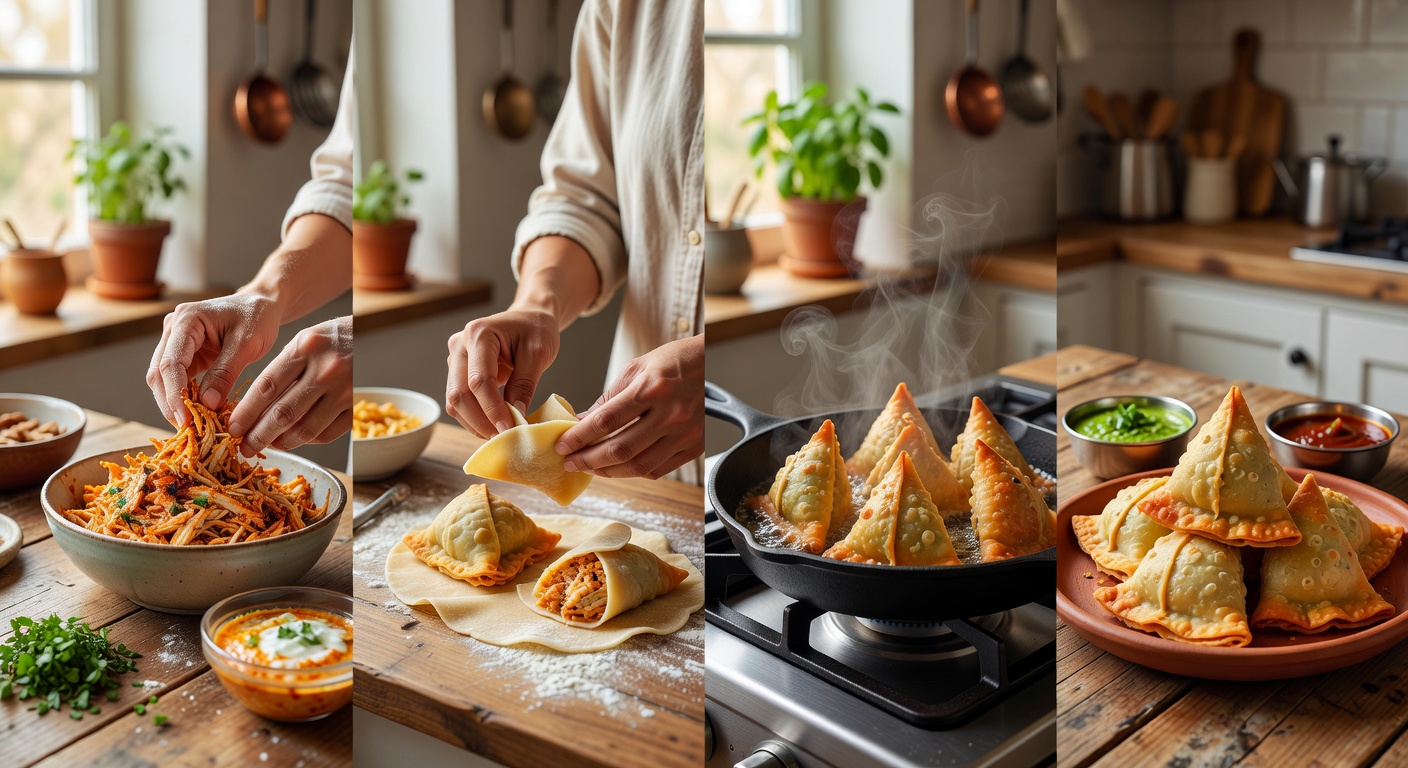
Start by preparing the dough from scratch for the most authentic texture, or use ready-made samosa sheets for a quicker option. For homemade dough, mix 2 cups of all-purpose flour with ½ teaspoon of salt in a bowl. Add 3 tablespoons of oil and one egg yolk, rubbing the mixture until it resembles breadcrumbs. Gradually add about ½ cup of warm water, mixing until a smooth, elastic dough forms. Cover with cling film and chill for 30 minutes while you make the filling. If using ready-made sheets, keep them covered with a damp cloth to prevent drying.
For the chicken filling for samosas, heat 2 tablespoons of oil in a pan and sauté 1 finely chopped onion until golden. Add 1 teaspoon each of ginger-garlic paste, cumin seeds, and garam masala, plus ½ teaspoon of turmeric and chili powder. Stir in 300 grams of finely chopped or shredded cooked chicken—leftover tandoori chicken works perfectly. Cook for 5 minutes, then add ½ cup of boiled and mashed potatoes for an aloo chicken samosa variation. For extra heat, fold in 2 tablespoons of chopped jalapenos, creating chicken and jalapeno samosas. Season with salt, fresh coriander, and a squeeze of lemon juice, then let the filling cool completely.
Folding is key to a crisp, sealed samosa. If using homemade dough, roll it into a thin circle about 6 inches wide, then cut it in half. Take one half, form a cone by overlapping the straight edge, and seal with water. Fill the cone with 1-2 tablespoons of the chicken mixture, then press the open edges together to form a triangle. For ready-made sheets, cut them into strips about 3 inches wide, fold into cones, and fill similarly. Ensure no filling touches the edges to prevent bursting during cooking. Crimp the final seam firmly with a fork or your fingers.
For frying, heat oil to 350°F (175°C) in a deep pan. Fry the chicken samosa in batches, turning occasionally, for 4-5 minutes until deep golden and crispy. Drain on paper towels. For a healthier option, bake at 375°F (190°C) for 20-25 minutes, brushing with oil halfway through. Frozen chicken tikka samosas can be cooked directly from frozen—add 2-3 minutes to the frying time or 5 minutes to baking. Serve hot with mint chutney or tamarind sauce.
This recipe yields about 20 samosas, perfect for a starter or snack. The dough’s elasticity and the spiced, moist filling ensure a satisfying crunch and flavor in every bite. Whether you use leftover tandoori chicken or a fresh batch, the step-by-step process is forgiving for beginners. Experiment with fillings like spiced peas or paneer, but the tandoori chicken version remains a classic. Enjoy the process of mastering this beloved street food at home.
5 Popular Variations to Try
One of the most beloved twists on the classic is the aloo chicken samosa, which combines the heartiness of spiced potatoes with tender pieces of chicken. This variation is a fantastic way to stretch the filling while keeping it moist and flavorful. The potato absorbs the rich spices, such as cumin, coriander, and garam masala, while the chicken adds a satisfying protein boost. When making an aloo chicken samosa, many home cooks parboil the potatoes and shred the cooked chicken, then sauté them together with onions, green chilies, and fresh coriander. This creates a filling that is both economical and deeply satisfying, perfect for those who want a more substantial snack without overwhelming the palate.
For those who crave a fiery kick, chicken and jalapeno samosas offer a modern, spicy twist on the traditional recipe. The heat from pickled or fresh jalapenos cuts through the richness of the fried pastry, while the chicken filling for samosas remains juicy and aromatic. To balance the spice, a touch of cream cheese or a squeeze of lime juice is often added to the mixture, creating a tangy contrast. This variation has become a favorite in fusion restaurants and is surprisingly easy to replicate at home. Simply dice the jalapenos finely and mix them with ground or shredded chicken, along with garlic, ginger, and a pinch of smoked paprika for depth. The result is a samosa that wakes up your taste buds with every bite.
A classic and deeply traditional option is the chicken mince filling for samosas, often referred to as keema style. This version uses finely ground or minced chicken, which is slow-cooked with peas, onions, and a robust blend of Indian spices like cinnamon, cloves, and cardamom. The keema filling is drier than other variations, which helps keep the pastry crisp during frying. Many cooks recommend browning the mince thoroughly before adding the spices to develop a rich, caramelized flavor. This style is particularly popular in Pakistani and North Indian cuisine, and it is a staple during Ramadan. You can often find frozen chicken tikka samosas in stores that use this keema base, as it freezes exceptionally well without losing its texture.
For a quick and convenient option, many people turn to frozen chicken tikka samosas, which are widely available and perfect for last-minute entertaining. These pre-made samosas typically feature a marinated chicken tikka filling, complete with yogurt, lemon juice, and tandoori spices. While store-bought versions are handy, you can easily replicate the flavor at home by using leftover grilled chicken tikka. Simply chop the chicken into small pieces, mix it with a little mint chutney, and wrap it in samosa pastry. This approach not only reduces food waste but also allows you to control the spice level. Whether baked or fried, these samosas deliver the signature smoky taste of tandoori chicken in a convenient, handheld form.
Finally, a versatile chicken filling for samosas can be adapted to suit any palate by experimenting with different herbs and aromatics. For example, adding fresh mint and cilantro to the chicken mixture creates a refreshing contrast to the crispy pastry, while a pinch of chaat masala adds a tangy, zesty finish. Some cooks even incorporate a handful of shredded cheese or a spoonful of yogurt to make the filling creamier. The beauty of the chicken samosa lies in its adaptability; you can use breast meat for a leaner option or thigh meat for extra juiciness. Whether you prefer the classic spiced potato blend of an aloo chicken samosa, the bold heat of chicken and jalapeno samosas, or the rich, savory depth of keema, there is a variation to match every craving.
Using Frozen Chicken Tikka Samosas: Tips for Best Results
For the best results with frozen chicken tikka samosas, start by selecting a high-quality brand. Look for packages where the chicken filling for samosas is listed as a primary ingredient, ideally with visible chunks of meat rather than a paste. Avoid boxes with excessive ice crystals, which indicate freezer burn and can lead to soggy pastry. If you enjoy variety, consider options like aloo chicken samosa (a potato and chicken blend) or chicken and jalapeno samosas for a spicy kick. Always check the packaging date and aim to use them within the recommended storage period—typically up to three months—to preserve the integrity of the chicken samosa filling.
Proper storage is crucial to maintain crispiness. Keep your frozen chicken tikka samosas in the original packaging or transfer them to an airtight freezer bag, pressing out as much air as possible. This prevents freezer burn and moisture absorption, which can ruin the delicate layers of the pastry. When you’re ready to cook, never thaw them first; cooking from frozen ensures the exterior becomes golden and flaky while the chicken filling for samosas heats through evenly. If you’re working with a bulk box, only remove the number you need and immediately return the rest to the freezer to avoid temperature fluctuations.
For maximum crunch, the air fryer is your best bet. Preheat the air fryer to 375°F (190°C) and arrange the frozen chicken tikka samosas in a single layer, leaving space between each for hot air circulation. Lightly spray or brush them with oil—just a thin coat—and cook for 8-10 minutes, flipping halfway through. This method yields a texture remarkably close to deep-frying, with the added benefit of using significantly less oil. If you’re cooking chicken and jalapeno samosas or aloo chicken samosa, the air fryer handles the varied fillings well, ensuring the pastry stays crisp without burning.
If you prefer the oven, preheat it to 400°F (200°C) and line a baking sheet with parchment paper. Place the frozen samosas in a single layer, leaving at least an inch between them. Bake for 12-15 minutes, turning once, until the pastry is deep golden and the chicken samosa filling is piping hot. For extra crispiness, place the baking sheet on the lowest rack for the last two minutes. Avoid overcrowding, as steam trapped between samosas will soften the crust. This method works particularly well for larger batches, like when serving a crowd with a mix of chicken tikka and aloo chicken samosa varieties.
Deep-frying remains the classic choice for authentic texture. Heat oil to 350°F (175°C) in a deep pan—use a thermometer for accuracy. Fry the frozen chicken tikka samosas in small batches, about 4-6 at a time, for 3-4 minutes until golden brown. Drain on paper towels immediately. The key is maintaining the oil temperature; if it drops too low, the samosas absorb excess oil and become greasy. For a lighter version, you can also pan-fry them in a shallow layer of oil, turning frequently, though this requires more attention to achieve even browning. Whichever method you choose, serve the samosas hot with mint chutney or tamarind sauce to complement the spiced chicken filling for samosas.
Common Mistakes to Avoid When Making Chicken Samosas
One of the most common pitfalls when making chicken samosa is ending up with a soggy, greasy pastry instead of that coveted crispy crunch. This usually happens when the chicken filling for samosas releases too much moisture during cooking. To avoid this, ensure your chicken filling is completely dry before wrapping. If you are using a recipe for aloo chicken samosa, the potatoes can also contribute excess water. A simple fix is to cook the filling until all liquid has evaporated, then let it cool completely. For an extra layer of protection, you can lightly dust the inside of your pastry sheets with cornflour or rice flour before adding the filling, which absorbs any residual moisture and helps the layers stay separate and flaky.
Another frequent issue is improperly sealed samosas that burst open during frying, spilling the chicken filling into the oil. This is often due to rushing the sealing process or using too much moisture. When working with store-bought wrappers or homemade dough, always use a flour-and-water paste (not just water) to seal the edges. Press firmly and ensure there are no air pockets trapped inside, as expanding steam can cause the pastry to rupture. For frozen chicken tikka samosas, this step is critical—if you plan to freeze them, seal each samosa twice, and freeze them in a single layer on a tray before transferring to a bag. This prevents them from sticking together and keeps the seals intact.
Undercooked filling is a surprisingly common mistake, especially when using raw chicken. Many home cooks assume the frying process will fully cook the meat, but the high heat of the oil often only cooks the pastry while leaving the center raw or lukewarm. The solution is to fully pre-cook your chicken filling for samosas before wrapping. Whether you are making classic spiced chicken or adventurous chicken and jalapeno samosas, the filling should be cooked through and allowed to cool to room temperature. This not only ensures food safety but also prevents the pastry from becoming soggy from steam released by hot filling. A good rule of thumb is to let the filling sit for at least 20 minutes after cooking.
Overcrowding the frying pan is another error that leads to uneven cooking and greasy results. When you drop too many samosas into hot oil at once, the temperature drops rapidly, causing the pastry to absorb oil instead of crisping up. For best results, fry in small batches, maintaining the oil temperature between 350°F and 375°F. If you are baking or air-frying frozen chicken tikka samosas, the same principle applies—leave space between each piece for hot air to circulate. This ensures every samosa comes out golden and crunchy, with a perfectly cooked chicken filling inside.
Finally, many people overlook the importance of resting the dough or wrappers. If you are making homemade pastry, skipping the chilling step can result in a tough, brittle crust that cracks during folding. For ready-made sheets, leaving them uncovered for too long can dry them out, making them impossible to seal. Keep your wrappers covered with a damp cloth while you work, and if using homemade dough, chill it for at least 30 minutes. This relaxes the gluten, making the pastry pliable and easier to shape into perfect triangles. Whether you are preparing classic chicken samosa or a fusion version like chicken and jalapeno samosas, these small adjustments will elevate your results from good to exceptional.
Expert Tips for Extra Crispy and Flavorful Samosas
Start with the dough, not the filling, for the foundation of an extra crispy samosa. Resting the dough is non-negotiable. After mixing flour, salt, a little oil, and warm water (or an egg yolk for richness, as some traditional recipes suggest), knead it until smooth. Cover it with cling film and let it rest in the fridge for at least 30 minutes. This relaxes the gluten, making the dough pliable and less likely to tear during rolling. A rested dough also puffs beautifully when fried, creating those delicate, flaky layers. For an authentic tandoori-inspired pastry, swap vegetable oil for ghee. The clarified butter adds a subtle nuttiness and a richer color, mimicking the charred, smoky notes you’d get from a tandoor oven. This simple swap elevates a standard chicken samosa into something truly special.
Mastering the double-fry technique is the secret to a shatteringly crisp crust. First, fry the assembled samosas at a lower temperature—around 160°C (320°F)—for 4-5 minutes. This cooks the pastry through without browning it, ensuring the chicken filling for samosas is heated thoroughly. Remove them and let them cool completely on a wire rack. Just before serving, fry them again at a higher temperature of 180°C (350°F) for 2-3 minutes. This second blast of heat drives out any residual moisture, creating a golden, crunchy shell that stays crisp for much longer. This method works perfectly whether you are making fresh samosas or using frozen chicken tikka samosas from the store.
The filling is where you balance the authentic tandoori taste. For a true tandoori flavor, marinate boneless chicken thighs in yogurt, ginger-garlic paste, and a robust spice blend of cumin, coriander, garam masala, and a pinch of smoked paprika or red food coloring for that iconic hue. Cook the chicken until just done, then shred or dice it finely. The key is to avoid a wet filling, which can make the pastry soggy. Sauté the cooked chicken with a little oil until any excess moisture evaporates. For a classic aloo chicken samosa, add boiled, mashed potatoes to the mix—they act as a binder and add a creamy texture that contrasts with the crispy shell. A handful of finely chopped cilantro and a squeeze of lemon juice brighten the spices.
Don’t be afraid to modernize the flavor profile. For a spicy twist, fold in finely diced jalapeños or serrano peppers into the chicken filling. The heat from the fresh chilies cuts through the richness of the fried pastry and complements the tandoori spices beautifully. These chicken and jalapeno samosas are a crowd-pleaser, offering a surprising kick. If you are using pre-made samosa wrappers, brush each sheet with a little ghee before folding to replicate the richness of homemade dough. Seal the edges with a flour-water paste to prevent them from bursting open during frying.
Finally, serve your samosas immediately after the second fry. Pair them with a cooling mint-coriander chutney and a tangy tamarind sauce. The contrast of the hot, crispy samosa with the cold, fresh chutney is what makes this snack unforgettable. Whether you are preparing a batch for a party or a quiet evening, these pro tips ensure your chicken samosas are always the star of the table—crispy, flavorful, and authentically tandoori.
Chicken Tandoori Samosa vs. Traditional Chicken Samosa: What’s the Difference?
The primary distinction between a chicken tandoori samosa and a traditional chicken samosa lies in the preparation and flavor profile of the filling. A classic chicken samosa typically features a curry-style filling, where minced or shredded chicken is cooked in a rich, spiced gravy often including onions, ginger, garlic, and a blend of ground spices like cumin, coriander, and garam masala. This filling is moist, savory, and deeply aromatic, with the texture of a hearty stew encased in a crispy pastry. In contrast, the chicken tandoori samosa draws its character from the iconic tandoori cooking method. The chicken is first marinated in a yogurt-based mixture infused with tandoori masala, ginger-garlic paste, and a hint of lemon juice, then grilled or baked to achieve a smoky, charred exterior. This process yields a drier, more robust filling with distinct smoky notes and a tangy, creamy undertone from the yogurt.
Texture is another key differentiator. The traditional chicken samosa filling is often soft and cohesive, with the chicken absorbing the gravy’s moisture, making it tender but not dry. The pastry, whether homemade or using ready-made sheets, must be sturdy enough to hold this moist filling without becoming soggy. For the tandoori version, the chicken is typically shredded or chopped into small pieces after cooking, resulting in a firmer, more textured bite. The yogurt marinade helps keep the meat moist during the high-heat cooking, but the final filling is less saucy, allowing the pastry to stay exceptionally crisp. This makes frozen chicken tikka samosas a popular choice for those seeking a convenient snack that retains its crunch after reheating, as the drier filling prevents the pastry from softening.
The flavor journey also diverges significantly. A traditional chicken samosa offers a layered, homestyle taste, with the spices melding into a warm, comforting profile that can include subtle heat from green chilies or a touch of sweetness from caramelized onions. Variations like aloo chicken samosa introduce potatoes for added bulk and creaminess, while chicken and jalapeno samosas bring a modern twist with bright, spicy notes. The tandoori samosa, however, is defined by its bold, smoky character. The marinade’s yogurt not only tenderizes the chicken but also provides a slight tang that balances the intense heat of the tandoori spices. When fried or baked, the filling releases a captivating aroma reminiscent of a tandoor oven, making each bite a distinct experience from the more traditional curry-style samosa.
Practical considerations also set them apart. Making chicken filling for samosas at home is straightforward for both styles, but the tandoori version often requires an extra step of pre-cooking the marinated chicken, either on a grill, in an oven, or even on a stovetop grill pan to mimic the smoky effect. This can be a time-saver if using leftover tandoori chicken from a previous meal. Traditional chicken samosa filling, on the other hand, is typically cooked entirely on the stovetop, allowing for easy adjustment of moisture and spice levels. Both can be frozen for later use, but the tandoori variety tends to hold up better in frozen chicken tikka samosas, as the drier filling resists ice crystal formation that can compromise texture. Ultimately, the choice comes down to preference: the comforting, saucy familiarity of a classic chicken samosa versus the bold, smoky, and crisp experience of its tandoori counterpart.
Frequently Asked Questions About Chicken Tandoori Samosas
Yes, you can absolutely bake chicken tandoori samosas instead of frying them, and this method works wonderfully for achieving a crisp, golden exterior with significantly less oil. To bake, preheat your oven to 375°F (190°C) and arrange the assembled samosas on a parchment-lined baking sheet. Brush each samosa lightly with oil or melted butter—this step is crucial for browning. Bake for 18-22 minutes, flipping halfway through, until the pastry is golden and the chicken filling for samosas is piping hot. For an even crunchier result, you can air-fry them at 350°F (175°C) for 10-12 minutes, shaking the basket once. This technique is especially convenient when using frozen chicken tikka samosas, as it eliminates the need for deep frying while still delivering a satisfying texture.
To prevent oil absorption during frying, the key lies in both the dough and the frying technique. Ensure your samosa pastry is rolled thin but not too thin, and that the edges are sealed tightly with a flour-water paste to prevent the chicken filling from leaking. The oil temperature should be maintained at 325-350°F (160-175°C); if it’s too low, the pastry will absorb excess oil and become greasy. Fry in small batches to avoid overcrowding, which drops the oil temperature. After frying, drain the samosas on a wire rack instead of paper towels—this allows air to circulate and keeps the crust crisp. For aloo chicken samosa variations, where potatoes are added to the filling, ensure the potato mixture is completely cool before wrapping, as steam can cause sogginess and lead to oil absorption.
Using leftover chicken is not only possible but highly recommended for chicken tandoori samosas. Shredded or diced leftover tandoori chicken, tikka, or even rotisserie chicken works beautifully. Simply mix it with finely chopped onions, green chilies, ginger-garlic paste, and spices like cumin, coriander, and garam masala. For a twist, try chicken and jalapeno samosas by adding diced pickled jalapenos for a tangy heat. If the leftover chicken is dry, add a tablespoon of yogurt or a splash of lemon juice to moisten the filling. This approach is perfect for reducing food waste and saves time since the chicken is already cooked. Just ensure the filling is well-seasoned and not too wet, as excess moisture can make the pastry soggy.
The right dipping sauce elevates the entire experience of a chicken samosa. Classic mint chutney is a perennial favorite—its cool, herbaceous notes balance the warm spices of the tandoori filling. Tamarind chutney, with its sweet and tangy profile, is another excellent choice, especially for aloo chicken samosa where the potato adds a neutral base. For a creamy option, a yogurt-based raita with cucumber or mint works well. If you enjoy heat, pair your samosas with a spicy sriracha-mayo or a cilantro-lime sauce. For a fusion twist, try a mango-habanero dip with chicken and jalapeno samosas—the fruitiness complements the jalapeno’s kick. Ultimately, the best sauce is one that contrasts the richness of the fried or baked pastry while highlighting the tandoori flavors.
Conclusion
The chicken tandoori samosa is a testament to the beauty of culinary fusion, proving that traditional boundaries are meant to be deliciously crossed. By marrying the smoky, spiced essence of tandoori chicken with the crispy, golden shell of a classic samosa, you create a snack that is both familiar and thrillingly new. Its versatility is its greatest strength—perfect as a party appetizer, a satisfying lunch, or a comforting teatime treat that brings people together.
We encourage you to treat this recipe as a canvas for your own creativity. Experiment with different fillings, from spicy paneer to tangy pulled pork, or play with baking and air-frying techniques for a lighter crunch. The true joy of cooking lies in making a dish your own, and the tandoori samosa is the perfect vehicle for that adventure.
Now it’s your turn. Head to your kitchen, fire up your spices, and craft your own batch of these irresistible pockets. Share your creations, your twists, and your triumphs—tag us and inspire a community of flavor explorers. Your next great snack is just a fold away.