Easy Healthy Meals for Busy People – Quick, Tasty, and Nutritious
If your days are packed and cooking feels like a chore, you’re not alone. The good news: eating well doesn’t have to be complicated, expensive, or time-consuming. With a few smart shortcuts and a flexible game plan, you can build fast meals that taste great and actually leave you feeling energized.
This guide gives you a simple base recipe with mix-and-match options, so you can make dinner in 20 minutes or less. No fancy techniques, no hard-to-find ingredients—just real food that fits your schedule.
Why This Recipe Works
This is a “base bowl” formula that you can customize to your tastes and whatever you have on hand. You’ll combine a fast-cooking protein, a quick grain or veggie base, and a bright sauce.
It’s simple, balanced, and endlessly flexible. – Fast: Everything cooks in 10–20 minutes using one pan and a microwave or toaster oven. – Balanced: Protein, fiber-rich carbs, and healthy fats keep you full and steady. – Modular: Swap ingredients based on cravings, budget, or pantry stock. – Meal-prep friendly: Cook once, mix and match all week.
Ingredients
Use this as a template. Pick one from each group and build your bowl.
- Protein (choose 1–2):Rotisserie chicken (shredded)Canned chickpeas or black beans (rinsed)Tofu (extra-firm, cubed)Eggs (hard-boiled or scrambled)Frozen shrimp (peeled, thawed)Turkey or chicken sausage (sliced)
- Base (choose 1):Microwaveable brown rice or quinoaPre-cooked farro or couscousCauliflower riceWhole-grain tortillas (for wraps)Mixed salad greens
- Vegetables (choose 2–4):Cherry tomatoes, cucumbers, bell peppersFrozen broccoli, peas, or mixed vegBaby spinach or kaleRed onion or green onionsAvocado (optional)
- Flavor Boosters (choose 1–2):Feta or shredded cheddarNuts or seeds (almonds, pumpkin seeds, sesame)Pickled onions or olivesFresh herbs (cilantro, parsley, basil)
- Quick Sauce (choose 1):Olive oil + lemon + salt + pepperGreek yogurt + garlic + dill + lemonTahini + warm water + lemon + cuminSoy sauce + honey + rice vinegar + sesame oilStore-bought pesto or salsa
- Pantry Staples:Olive oil, salt, pepper, garlic powder, chili flakes lazy meals with almost no prep
Instructions
- Prep your base. Microwave rice or quinoa according to package directions, or warm tortillas. If using salad greens, rinse and pat dry.
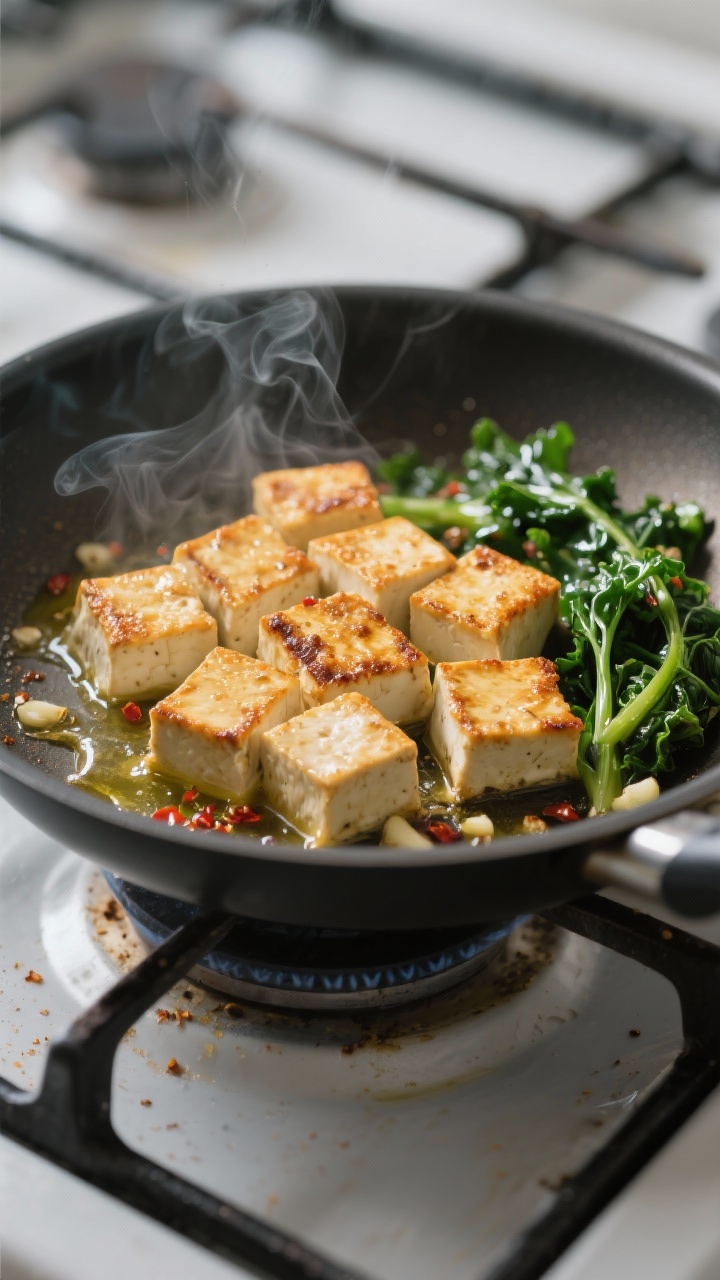
- Heat your protein. Sauté tofu, shrimp, or sausage in a nonstick pan with a bit of olive oil, salt, and pepper (5–7 minutes).If using rotisserie chicken or beans, warm gently in the same pan with a splash of water or broth.
- Cook or thaw vegetables. Microwave frozen veggies for 2–3 minutes, or quickly sauté fresh veggies until tender-crisp. For raw veg like cucumber and tomatoes, just chop.
- Mix your sauce. Whisk together your chosen sauce in a small bowl. Aim for something creamy or zippy to tie everything together.
- Assemble. Layer base, protein, and veggies in a bowl or wrap.Drizzle with sauce. Add flavor boosters like herbs, nuts, or cheese.
- Taste and adjust. Add a squeeze of lemon, a pinch of salt, or a dash of chili flakes to brighten flavors.
Keeping It Fresh
– Prep smart, not hard: Batch-cook your base and protein on Sunday, then assemble fresh bowls in minutes during the week. – Store separately: Keep sauces, crunchy veg, and greens separate to avoid sogginess. Combine just before eating. – Use clear containers: Seeing your food increases the odds you’ll actually eat it. – Revive leftovers: Add a splash of water when reheating grains to bring back moisture.
Toss in fresh herbs or lemon at the end to wake up flavors.

Why This is Good for You
– Steady energy: Protein and fiber help control hunger and stabilize blood sugar, so you avoid the mid-afternoon crash. – Nutrient-dense: Colorful vegetables bring vitamins, minerals, and antioxidants without a lot of calories. – Healthy fats: Olive oil, avocado, nuts, and seeds support brain health and keep meals satisfying. – Portion-friendly: Building bowls lets you control portions naturally—half veggies, a palm-sized portion of protein, and a fist of grains works well for most adults.
What Not to Do
– Don’t skip seasoning: A pinch of salt, acid (lemon or vinegar), and a hit of spice make simple food taste great. – Don’t drown it in sauce: Sauces add flavor, but too much can overwhelm or add unnecessary calories. Start small. – Don’t overcook proteins: Dry tofu, rubbery shrimp, or tough chicken ruin the experience. Aim for just-cooked and juicy. – Don’t forget texture: Add crunch with nuts, seeds, or crisp veggies to keep meals interesting.
Recipe Variations
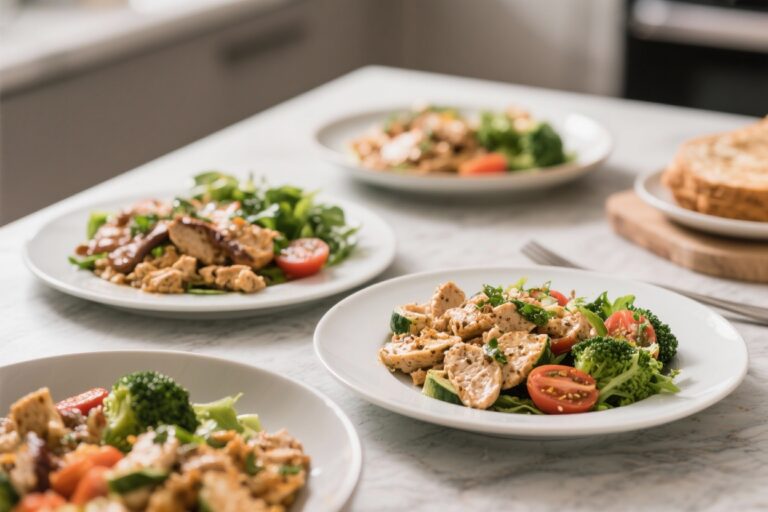
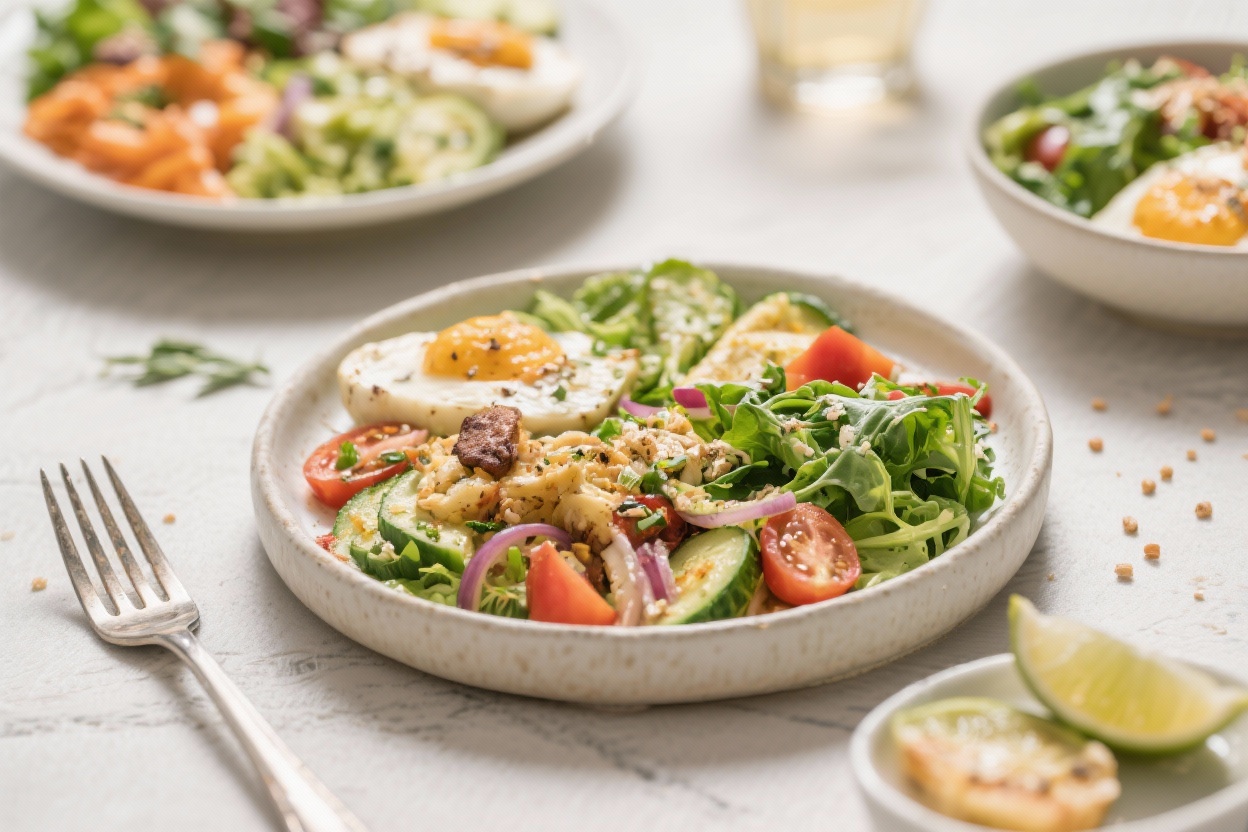
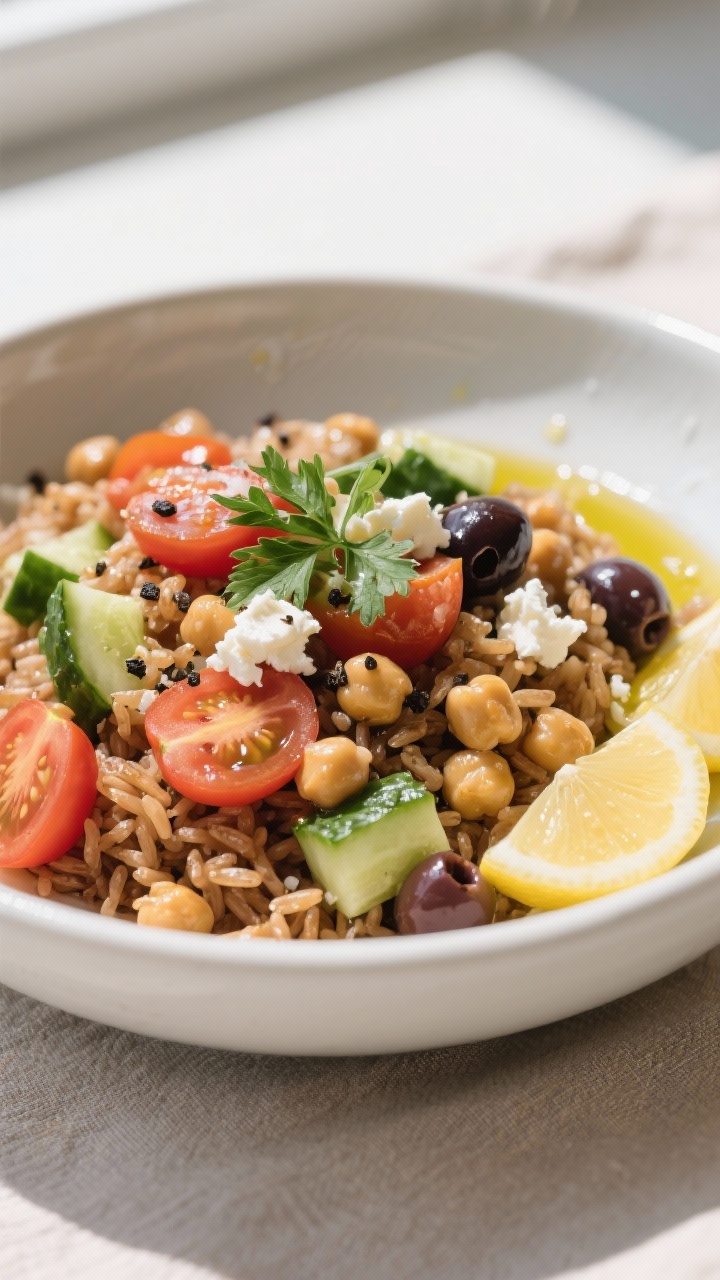
– Mediterranean Bowl: Brown rice, chickpeas, cucumber, cherry tomatoes, olives, feta, parsley, and lemon-olive oil dressing. – Teriyaki Shrimp Bowl: Quinoa, sautéed shrimp, steamed broccoli, edamame, and a soy-honey-sesame drizzle.
Top with sesame seeds. – Southwest Wrap: Whole-grain tortilla, black beans, corn, peppers, avocado, salsa, and a dollop of Greek yogurt. Add cilantro and lime. – Tofu Power Bowl: Cauliflower rice, crispy tofu, kale, shredded carrots, and tahini-lemon sauce with cumin. – Breakfast-for-Dinner Scramble: Scrambled eggs, sautéed spinach, tomatoes, and whole-grain toast. Finish with hot sauce. – Pesto Chicken Grain Bowl: Farro, rotisserie chicken, roasted cherry tomatoes, arugula, and a spoonful of pesto.
FAQ
How can I save even more time on weeknights?
Stock your freezer and pantry.
Keep microwaveable grains, frozen veggies, canned beans, and a reliable sauce on hand. Pre-cut veggies and pre-cooked proteins like rotisserie chicken make assembly a breeze.
What if I’m vegetarian or vegan?
Use tofu, tempeh, beans, or lentils for protein. Build flavor with spices, sauces like tahini or salsa, and toppings like nuts, seeds, and avocado.
It’s easy to keep it fully plant-based without losing satisfaction.
Can I meal-prep this for the whole week?
Yes. Cook grains and proteins in bulk and store in airtight containers for 3–4 days. Keep sauces and raw veggies separate, and assemble right before eating for the best texture.
How do I make it kid-friendly?
Serve components separately “snack plate” style.
Offer mild sauces, grated cheese, and familiar veggies like cucumbers or carrots. Let kids assemble their own bowl or wrap.
What if I don’t like salads?
Skip the greens and use a warm base like rice, quinoa, or tortillas. Load up on cooked veggies or chop raw ones small and mix them in for crunch without the salad vibe.
How can I add more flavor without extra calories?
Use acids (lemon, lime, vinegar), fresh herbs, spices, garlic, and chili flakes.
These brighten the dish and make simple ingredients taste restaurant-level.
Is this good for weight management?
It can be. Fill half your plate with veggies, include a lean protein, and choose whole grains. Use sauces thoughtfully and add healthy fats in small amounts to stay satisfied.
What’s a good sauce if I don’t want to cook anything?
Olive oil, lemon juice, salt, pepper, and a pinch of garlic powder.
Or use store-bought salsa, hummus thinned with water, or jarred pesto in small spoonfuls.
Can I do this gluten-free?
Absolutely. Choose rice, quinoa, or potatoes as your base, and check labels on sauces and sausages. Most beans, veggies, and proteins are naturally gluten-free.
How do I keep tofu from being soggy?
Use extra-firm tofu, pat it dry, and cut into cubes.
Sear in a hot nonstick pan with a little oil and don’t stir too often. Let it brown on each side for a crisp edge.
Wrapping Up
Healthy weeknight meals don’t need a long ingredient list or hours in the kitchen. With a flexible base, a quick protein, and a bright sauce, you can build dinners that are fast, nourishing, and genuinely tasty.
Keep your pantry stocked, prep a few components ahead, and mix and match through the week. Eat well, stay energized, and get back to the rest of your life.