Weekly Meal Prep for Beginners – A Simple, Stress-Free Guide
Weekly Meal Prep for Beginners – A Simple, Stress-Free Guide
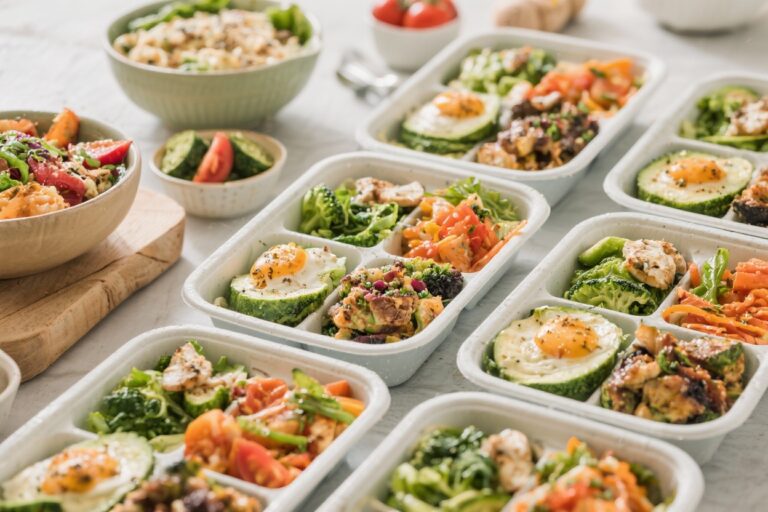
Meal prep sounds great until you’re staring at a pile of groceries with no plan. The truth is, you don’t need fancy containers or chef-level skills to make it work. With a short plan and a few basics, you can save money, waste less, and eat better all week. This guide keeps things simple and flexible, so you can start now and adjust as you go. Think of it as a blueprint you can customize to your taste and schedule.
What Makes This Special
Weekly meal prep for beginners – Weekly Meal Prep for Beginners – A Simple, Stress-Free Guide Meal prep sounds great until you’re sta
This plan focuses on versatile, affordable ingredients you can mix and match into different meals. Instead of cooking five unique dishes, you’ll prepare core components once and combine them in new ways. That means less time in the kitchen and fewer dirty dishes. It’s also designed for realistic weeknights, not Instagram perfection. Most importantly, it helps you build a routine you can actually keep.
Ingredients
Weekly meal prep for beginners – The truth is, you don’t need fancy containers or chef-level skills to make it work
Here’s a basic grocery list that covers proteins, grains, veggies, and flavor boosters. Adjust portions to match your household size and appetite.
- Proteins:2 lb chicken breast or thighs, 1 can chickpeas (or black beans), 8 eggs, 1 block firm tofu or tempeh
- Grains/Starches:2 cups dry brown rice or quinoa, 1 lb sweet potatoes or white potatoes, 6 whole-grain tortillas or wraps
- Vegetables (mix and match):2 bell peppers, 1 red onion, 1 head broccoli, 1 bag baby spinach, 1 cucumber, cherry tomatoes, carrots
- Fats and Flavor:Olive oil or avocado oil, soy sauce or tamari, garlic, lemon or lime, chili flakes, cumin, paprika, salt, pepper
- Extras:Greek yogurt or hummus, salsa, feta or shredded cheese, avocado (for same-day use), mixed greens
- Optional:Store-bought rotisserie chicken for backup, frozen veggies for quick add-ins Make Ahead Meals for Busy Weeks
Instructions
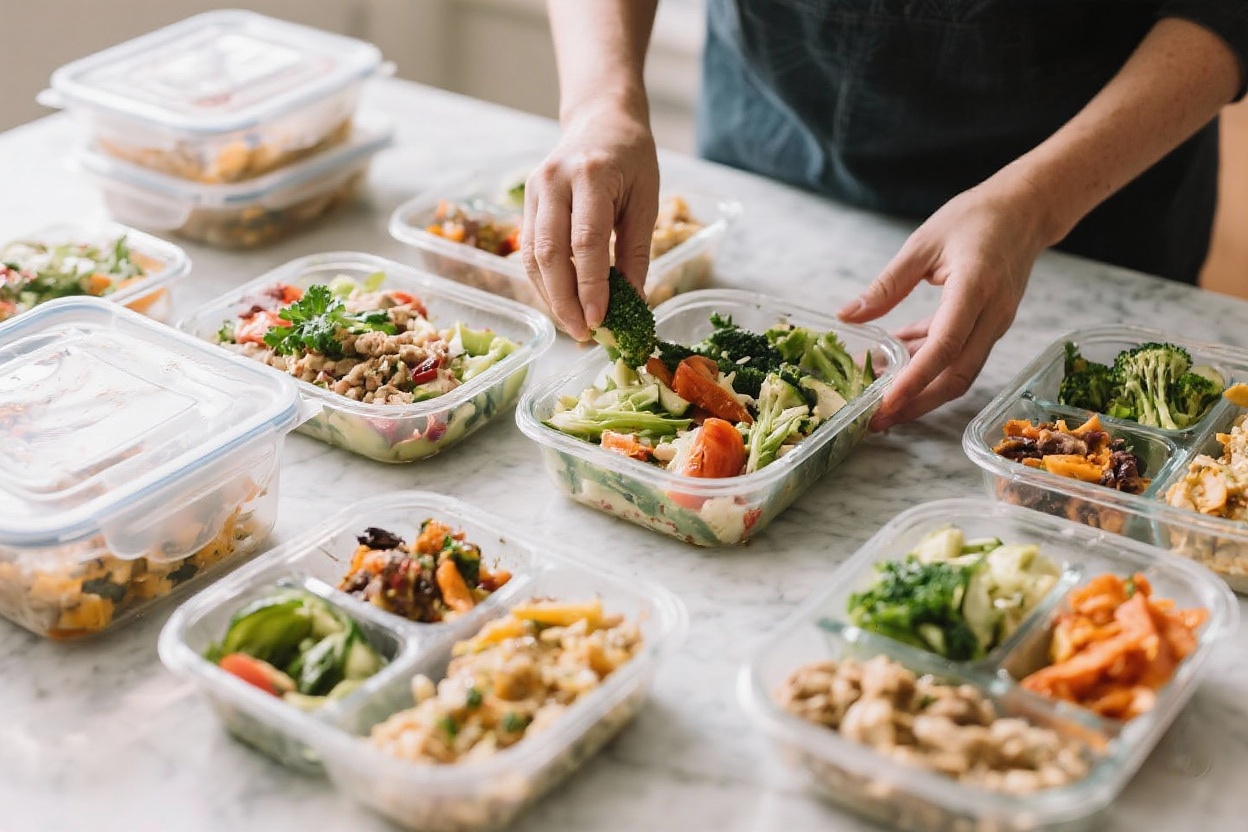
Weekly meal prep for beginners – With a short plan and a few basics, you can save money, waste less, and eat better all week
- Pick your base plan.Choose two proteins (for example, chicken and chickpeas), one grain (rice or quinoa), and two roasting vegetables. This reduces decision fatigue and keeps flavors consistent.
- Preheat and batch roast.Heat the oven to 425°F (220°C). Chop potatoes, broccoli, and peppers into bite-sized pieces. Toss with oil, salt, pepper, and paprika. Spread on trays and roast for 20–30 minutes, flipping once.
- Cook your grain.While veggies roast, cook rice or quinoa according to package instructions. For extra flavor, add a pinch of salt and a squeeze of lemon. Fluff and let it cool slightly.
- Protein two ways.Season chicken with salt, pepper, garlic, and cumin. Bake at 425°F for 18–22 minutes or pan-sear until cooked through. For plant-based, drain and pat dry chickpeas, toss with oil and spices, and roast on a separate tray until crisp. Pan-fry tofu cubes with soy sauce and a splash of lime for a second option.
- Make a quick sauce.Whisk 3 tbsp olive oil, 1 tbsp soy sauce, 1 tbsp lemon or lime juice, 1 tsp honey or maple, and chili flakes. Or stir together Greek yogurt, lemon, garlic, and salt for a creamy drizzle.
- Boil or bake eggs.Hard-boil 6–8 eggs for grab-and-go protein. Chill, peel, and store. These work for breakfast bowls, snacks, or salads.
- Prep raw add-ins.Slice cucumber, cherry tomatoes, and carrots. Rinse and dry spinach. Keep them separate so they stay crisp.
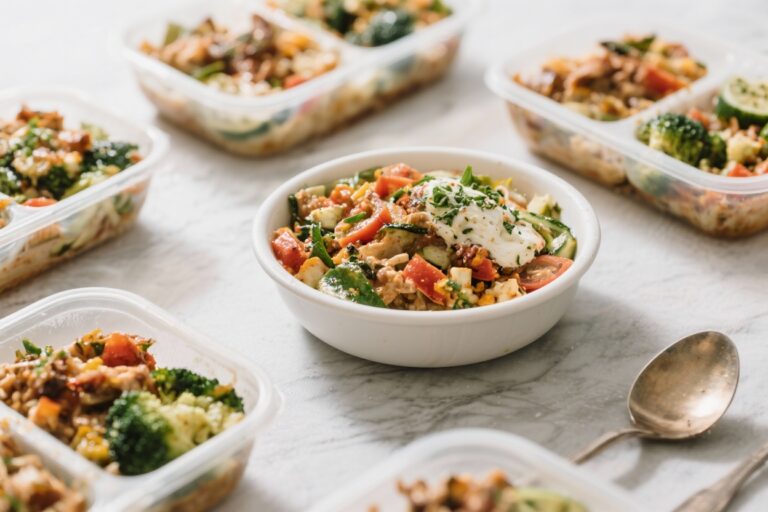
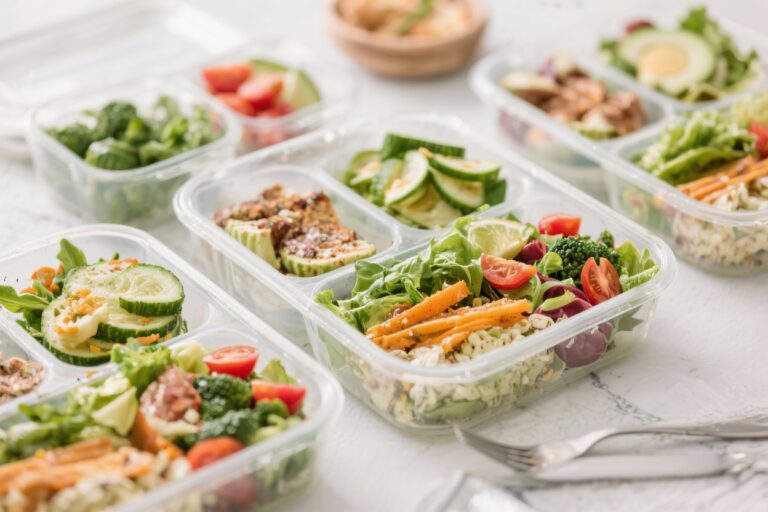
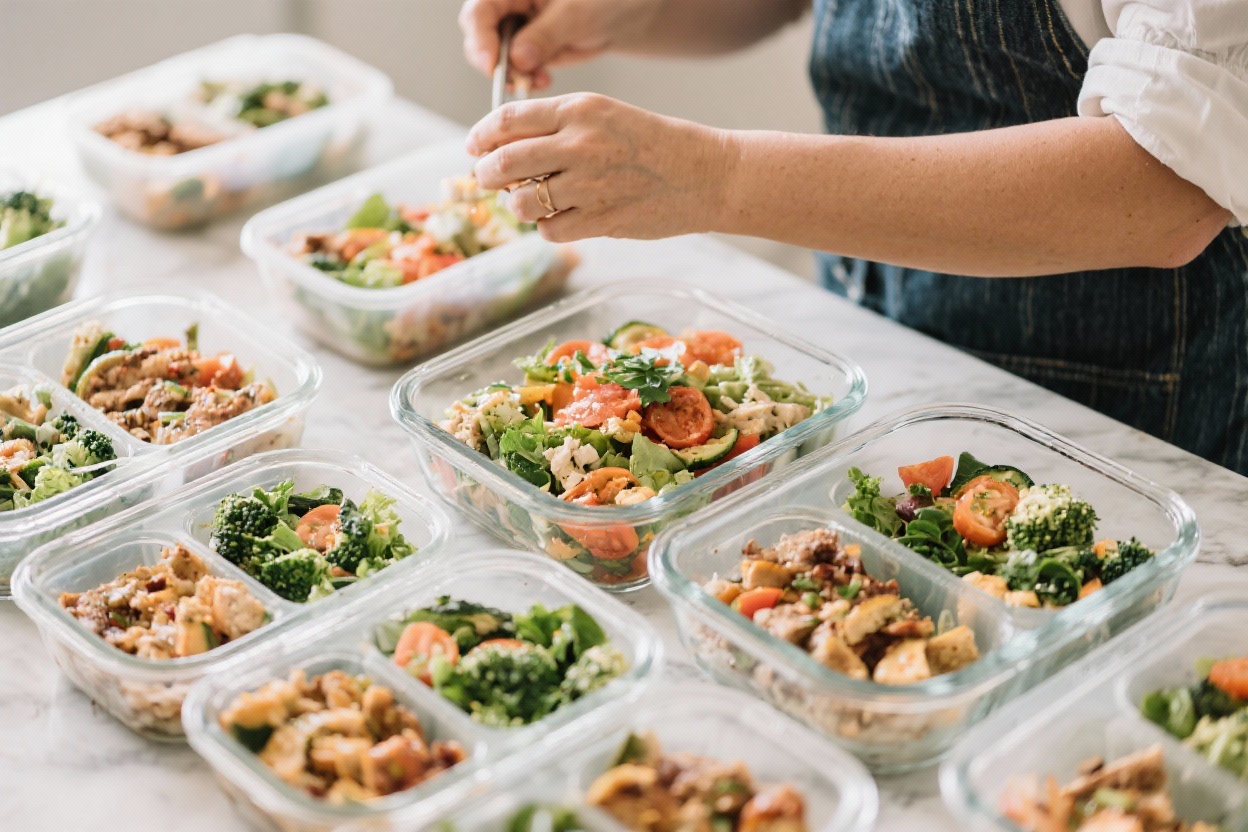
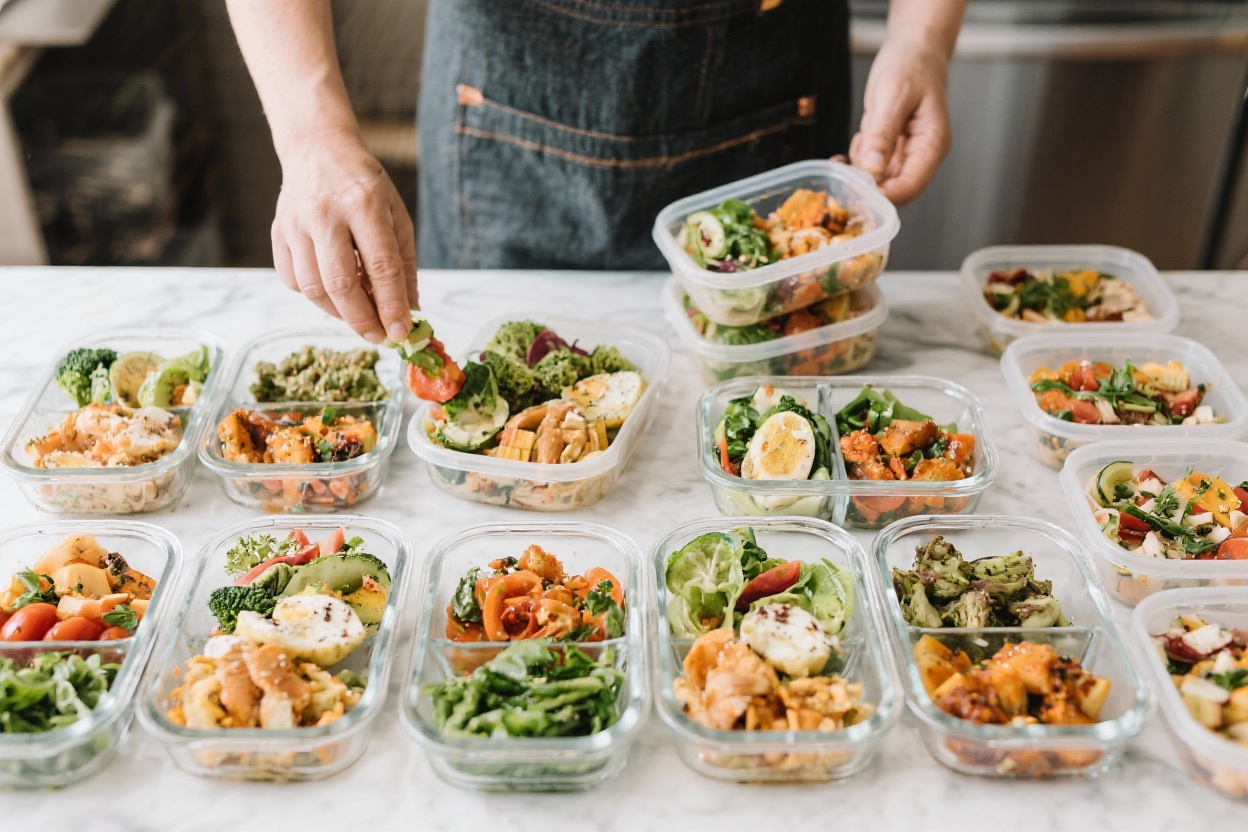
- Assemble mix-and-match meals.Build three types of meals for variety:Bowls:Grain + roasted veg + protein + sauce.Wraps:Tortilla + spinach + chopped chicken or tofu + veggies + hummus or yogurt sauce.Salads:Greens + cucumber + tomatoes + chickpeas or eggs + olive oil and lemon.
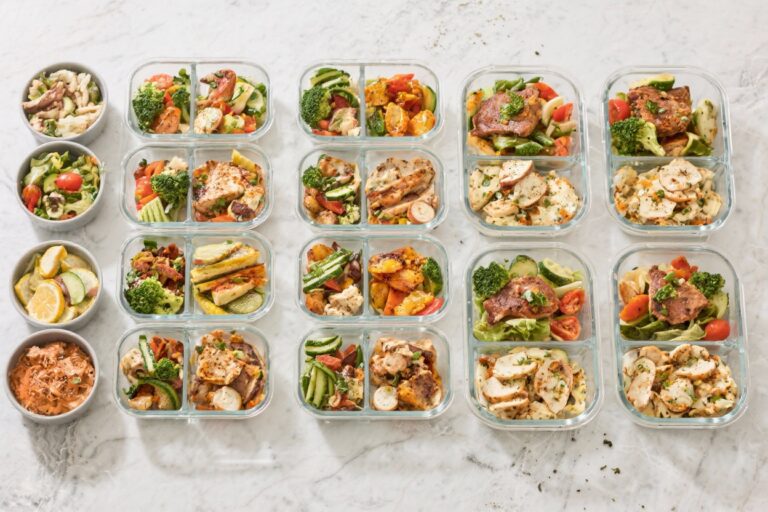
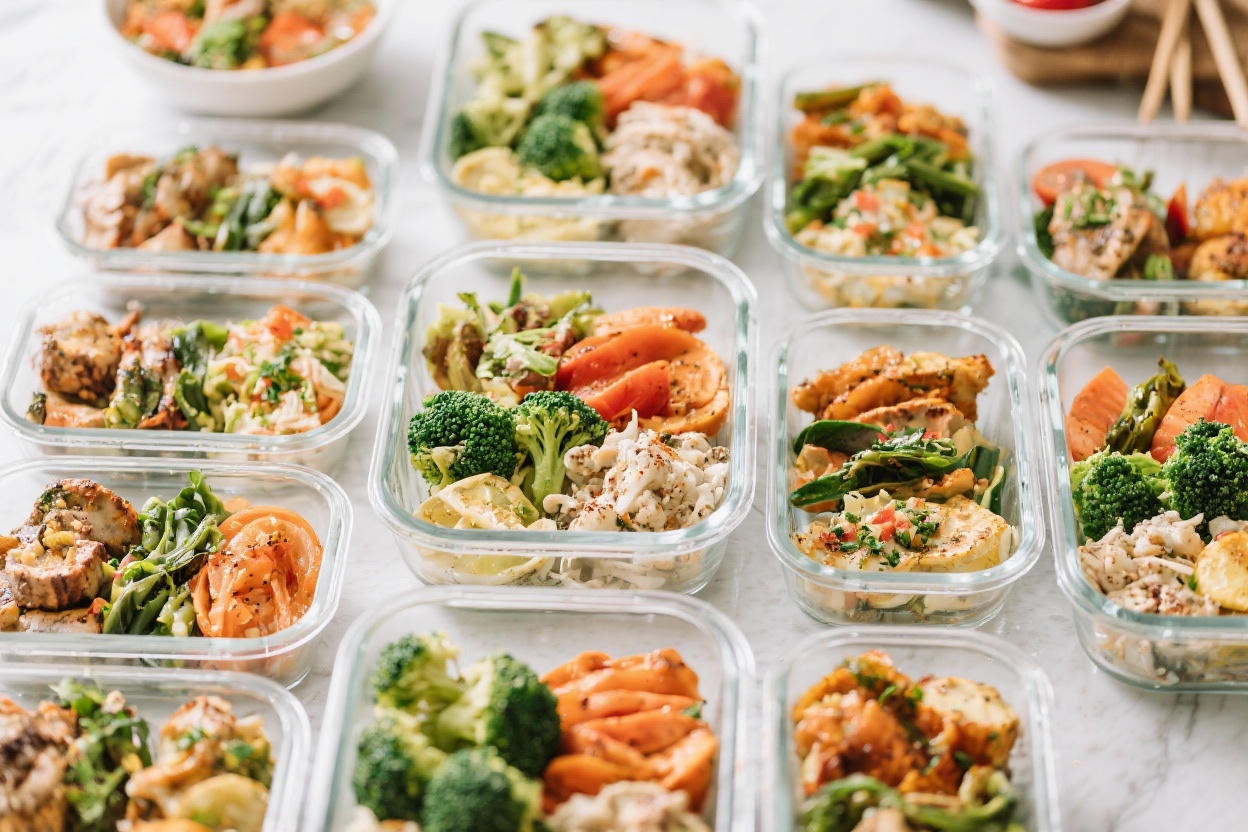
- Portion smartly.Use 4–6 containers for main meals and 2–3 small containers for snacks or sauces. Keep sauces separate to avoid soggy food.
- Label and store.Mark containers with the date and contents. Put 2–3 meals in the fridge for early in the week and freeze extras for later.
- Plan quick refreshers.Keep avocado, fresh herbs, or salsa on hand to add right before eating. Fresh toppings make reheated meals feel new.
Keeping It Fresh
- Fridge life: Cooked proteins and grains last 3–4 days. Roasted veggies last 3–4 days. Salads with dressing last 1 day, so keep dressing separate.
- Freezer tips: Freeze plain cooked chicken, rice, and roasted veggies in airtight containers for up to 2–3 months. Thaw overnight in the fridge.
- Avoid sogginess: Store sauces, tomatoes, and cucumbers separately. Add them right before eating.
- Reheat right: Add a splash of water to rice before microwaving and cover loosely. For roasted veggies, reheat in a skillet or air fryer to bring back crisp edges.
- Rotate meals: Eat the most perishable items first, like leafy salads and fresh-cut cucumber.
Health Benefits
- Balanced nutrition: Building meals around protein, fiber-rich grains, and vegetables supports steady energy and keeps you full longer.
- Portion control: Pre-portioned meals make it easier to manage calories without counting every bite.
- Less processed food: Cooking basics at home means fewer additives, less sodium, and more control over ingredients.
- Consistent habits: Knowing you have meals ready reduces stress and makes it easier to stick to your goals, whether that’s saving money or eating more vegetables.
What Not to Do
- Don’t cook five totally different recipes. You’ll burn out and create a mountain of dishes. Stick to versatile components.
- Don’t prep everything the same day if you’re overwhelmed. Split it: cook grains and roast veg one day; proteins and sauces the next.
- Don’t dress salads in advance. Keep dressing on the side to maintain crunch.
- Don’t ignore storage. Use airtight containers and label them. Guessing leads to waste.
- Don’t overcomplicate flavors. A couple of good sauces can change everything. You don’t need 10 spices.
Alternatives
- Protein swaps: Use ground turkey, canned tuna, tempeh, or lentils. For speed, rotisserie chicken is a reliable backup.
- Grain swaps: Try couscous, barley, farro, or cauliflower rice for a lower-carb option.
- Veggie swaps: Use frozen broccoli, peas, or mixed veg when fresh produce is pricey or out of season.
- Flavor profiles: Go Mediterranean (lemon, oregano, feta), Mexican-inspired (cumin, chili, salsa), or Asian-inspired (soy, ginger, sesame). Keep one theme per week to simplify.
- Sauce ideas: Tahini-lemon, peanut-lime, pesto, or vinaigrette. Make one creamy and one bright so you have contrast.
FAQ
How many meals should I prep at once?
Start with 4–6 meals for the week, plus a few easy snacks. That gives you structure without locking you in. You can always freeze extras or plan a midweek mini-prep.
Is it safe to reheat chicken and rice?
Yes, as long as you cook and store them properly. Cool food quickly, refrigerate within two hours, and reheat until steaming hot. Add a splash of water to rice to prevent dryness.
What if I get bored of the same food?
Change the sauce or topping. The same base becomes new when you add salsa one day and yogurt-garlic sauce the next. Fresh herbs, pickled onions, and a squeeze of lemon go a long way.
Do I need special containers?
No. Use what you have as long as the lids seal well. If you’re buying, get a few medium containers for mains, small ones for sauces, and one or two freezer-safe options.
How can I meal prep on a tight budget?
Buy in bulk, choose seasonal or frozen vegetables, use beans or eggs for protein, and repeat ingredients across meals. Stick to one or two sauces to avoid extra costs.
Can I meal prep for breakfast too?
Absolutely. Try overnight oats, hard-boiled eggs with fruit, or yogurt with granola. Keep it simple so it doesn’t add stress to your prep day.
How long does a full prep take?
For beginners, expect 1.5 to 2 hours, including cleanup. It gets faster once you find your rhythm and repeat your favorite combinations.
What if I don’t have time on Sundays?
Pick any day that works. You can also split prep across two evenings—grains and veg one night, proteins and sauces the next. A little planning beats no planning.
In Conclusion
Weekly meal prep doesn’t have to be complicated. With a short plan, a couple of proteins, one grain, and a pile of veggies, you can build meals that are easy, tasty, and flexible. Start small, keep sauces separate, and use fresh toppings to keep things interesting. Over time, you’ll find your favorite combos and a routine that fits your life. Consistency matters more than perfection—just start, and adjust as you go.