No Fail Cake Recipes – Simple, Reliable, and Delicious
If baking makes you nervous, you’re not alone. Many home cooks worry about flat layers, dry crumbs, or frosting that slides right off. The good news: you don’t need fancy tools or pastry-school skills to make a cake that turns out every time.
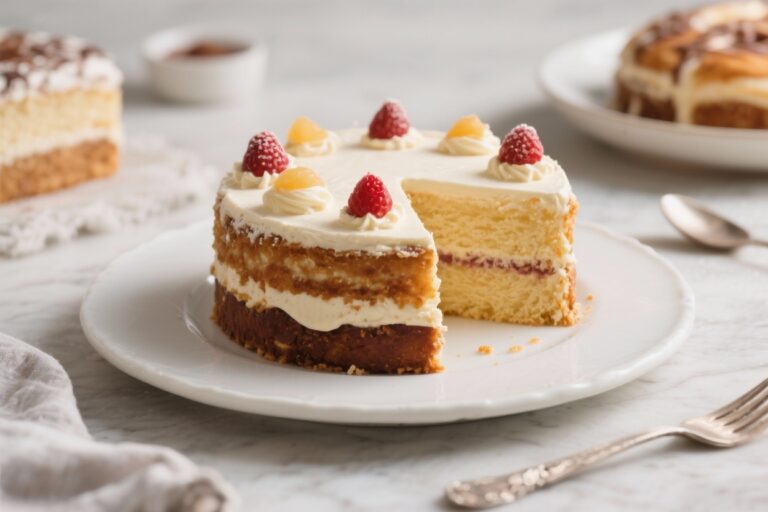
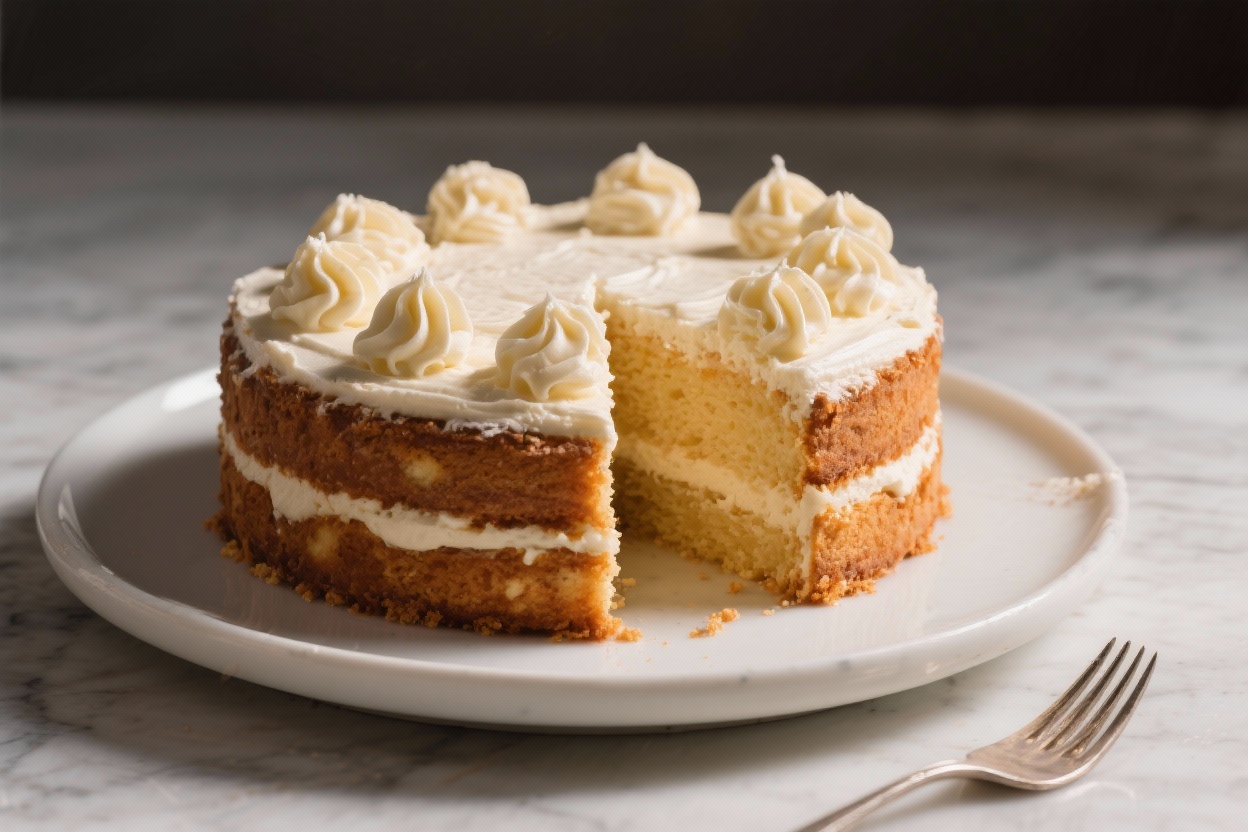
These no fail cake recipes focus on simple methods, pantry ingredients, and fuss-free steps. Whether you’re baking for a birthday or just craving a slice with coffee, you’ll get soft, moist results without stress.
What Makes This Special
This no fail approach is all about predictable results. It uses straightforward ratios, clear steps, and forgiving ingredients that help prevent dryness or dense texture.
The method works for sheet cakes, cupcakes, and layer cakes without changing the core formula. You’ll also find helpful cues—like what the batter should look like—so you know you’re on the right track. Best of all, the recipe is mix-by-hand friendly, so you don’t need a stand mixer to succeed.
Ingredients
- All-purpose flour – 2 cups (240 g), spooned and leveled
- Granulated sugar – 1 cup (200 g)
- Baking powder – 2 teaspoons
- Baking soda – 1/2 teaspoon
- Fine salt – 1/2 teaspoon
- Neutral oil (canola, vegetable, or light olive) – 1/2 cup (120 ml)
- Unsalted butter, melted and cooled – 4 tablespoons (55 g) for flavor and tenderness
- Eggs – 2 large, room temperature
- Whole milk – 3/4 cup (180 ml), room temperature
- Greek yogurt or sour cream – 1/2 cup (120 g) for moisture
- Vanilla extract – 2 teaspoons
- Optional add-ins – lemon zest, mini chocolate chips, or sprinkles
- For simple frosting (optional): powdered sugar, butter, vanilla, pinch of salt, and a splash of milk
Instructions
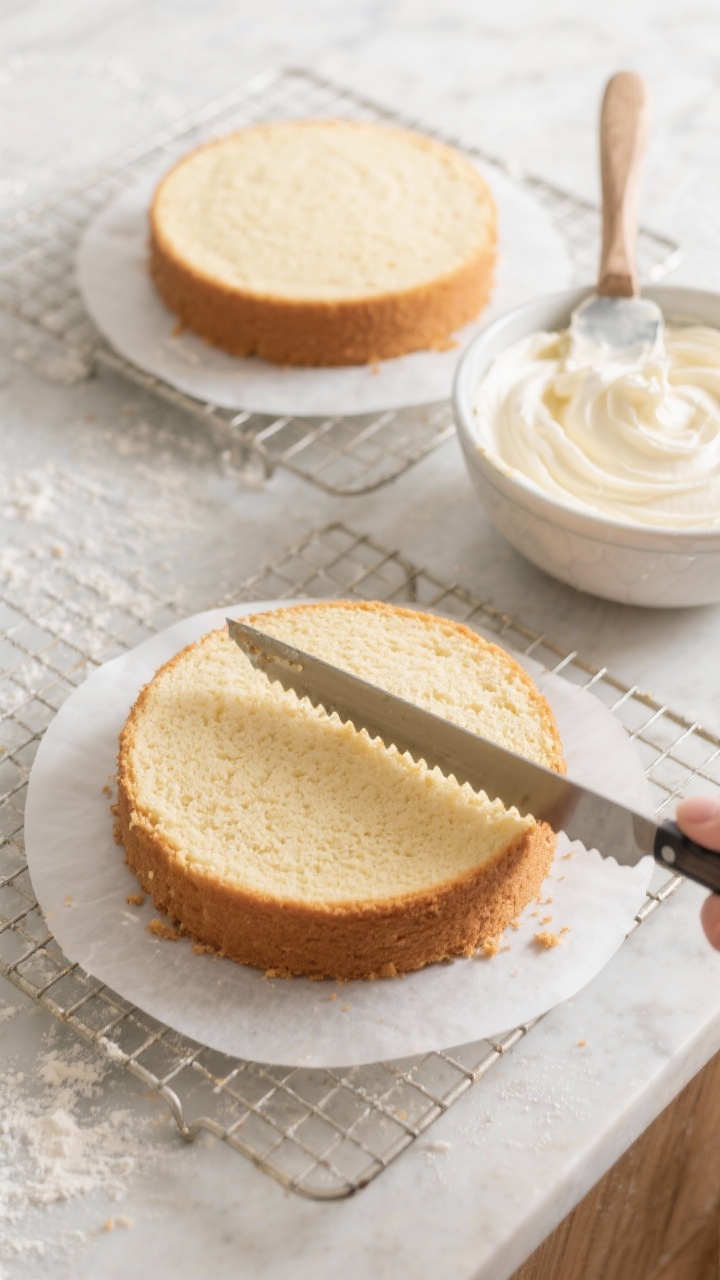
- Prep the pan and oven. Heat the oven to 350°F (175°C).Grease a 9×13-inch pan or two 8-inch round pans and line with parchment. This prevents sticking and helps even rising.
- Whisk dry ingredients. In a large bowl, whisk flour, sugar, baking powder, baking soda, and salt until no streaks remain. Even mixing here prevents pockets of leavening later.
- Combine wet ingredients. In a separate bowl, whisk oil, melted butter, eggs, milk, yogurt (or sour cream), and vanilla until smooth.The mixture should be creamy and unified.
- Bring it together. Pour wet into dry. Gently whisk or fold with a spatula until just combined. A few small lumps are fine. Do not overmix, or the cake can turn tough.
- Optional mix-ins. Fold in 1/2 cup mini chips, 1 tablespoon zest, or 2 tablespoons sprinkles.Keep add-ins light to avoid weighing the batter down.
- Pan and tap. Pour batter into the prepared pan(s). Smooth the top with a spatula and tap the pan gently on the counter to release large air bubbles.
- Bake. For a 9×13, bake 28–34 minutes. For two 8-inch rounds, bake 24–30 minutes.The cake is done when the center springs back and a toothpick comes out with a few moist crumbs.
- Cool. Let the cake cool in the pan for 10 minutes, then transfer to a rack to cool completely. This prevents soggy edges and keeps the crumb tender.
- Frost (optional). Beat 1/2 cup softened butter with 2 cups powdered sugar, 1 teaspoon vanilla, a pinch of salt, and 1–3 tablespoons milk until fluffy. Spread on the cooled cake.
How to Store
- Room temperature: Keep the unfrosted or buttercream-frosted cake covered at room temp for up to 2 days.Use a cake dome or wrap slices well.
- Refrigerator: For warmer climates or cream cheese frosting, chill the cake, covered, for up to 5 days. Bring slices to room temp before serving for best texture.
- Freezer: Wrap unfrosted layers tightly in plastic, then foil. Freeze up to 2 months.Thaw overnight in the fridge, then bring to room temp before frosting.
Why This is Good for You
A no fail recipe reduces stress and waste. You’ll spend less time second-guessing and more time enjoying the results. The batter uses oil plus a modest amount of butter for a tender crumb that stays moist for days, which means fewer dry leftovers.
Adding yogurt or sour cream boosts moisture and helps stabilize the batter, so it rises evenly and stays soft. It’s reliable, flexible, and perfect for busy schedules.
Common Mistakes to Avoid
- Overmixing the batter: It toughens the crumb and can cause tunneling. Stop as soon as the flour disappears.
- Cold ingredients: Cold eggs or milk can make the batter curdle and bake unevenly.Let them come to room temp first.
- Wrong pan size: Overfilled pans overflow and underbake in the center. Stick to a 9×13 or two 8-inch rounds for this batch size.
- Skipping parchment: Even greased pans can stick. Parchment circles or a sheet on the bottom make release effortless.
- Opening the oven early: Wait at least 20 minutes before checking.A draft can collapse the rise.
- Frosting a warm cake: The frosting melts and pulls crumbs. Cool completely before decorating.
Variations You Can Try
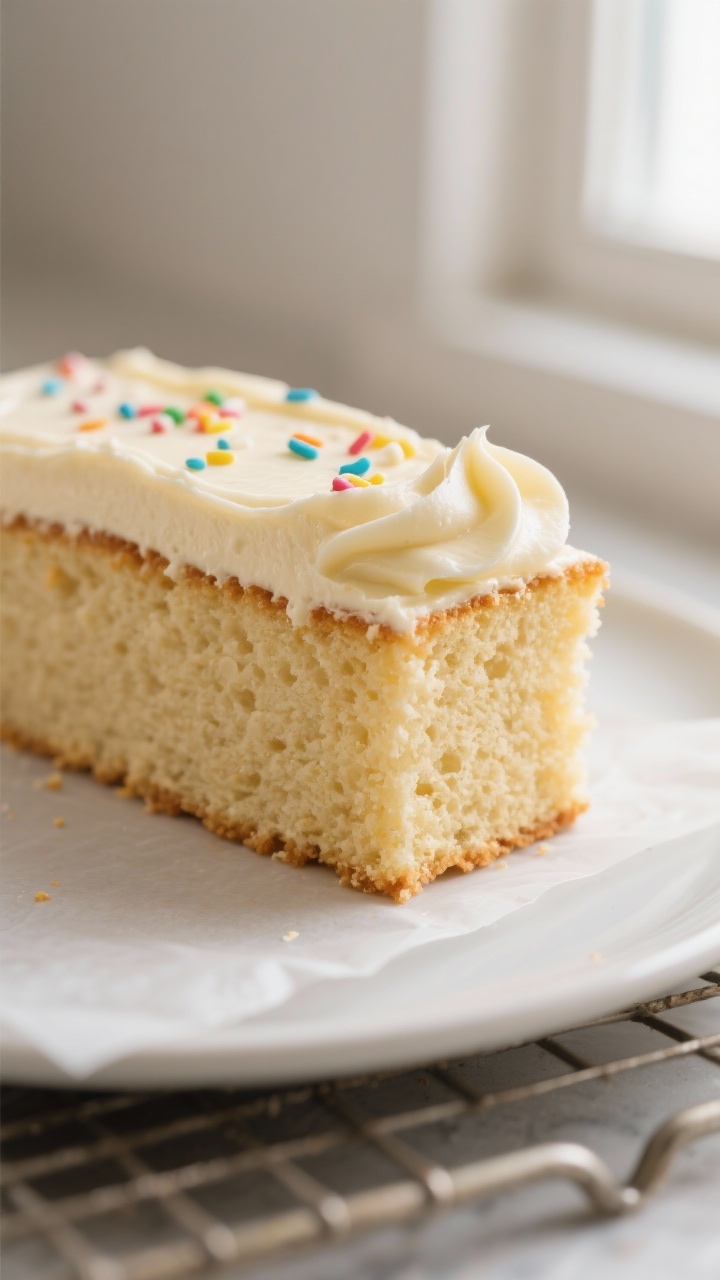
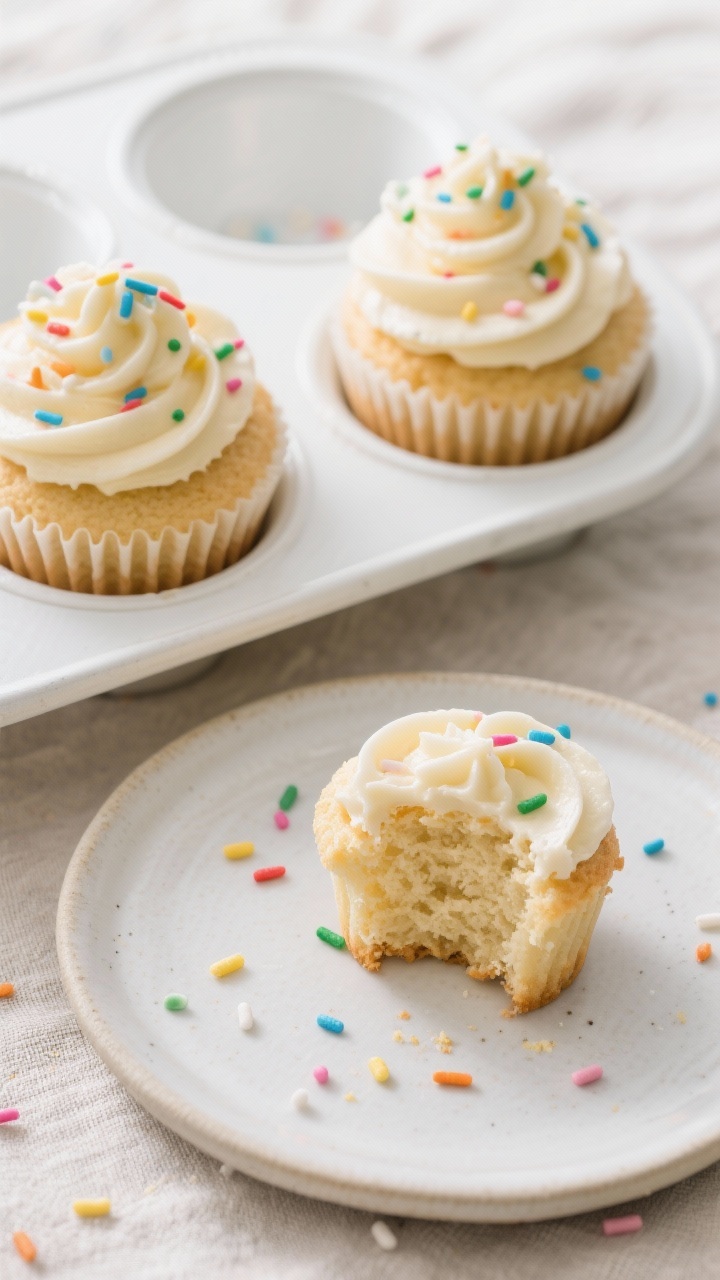
- Classic Vanilla Sheet Cake: Use the base recipe as-is; finish with vanilla buttercream and rainbow sprinkles.
- Lemon Poppy Seed: Add 1 tablespoon lemon zest, 2 tablespoons lemon juice (subtract 2 tablespoons milk), and 1 tablespoon poppy seeds.
- Chocolate Version: Replace 1/2 cup flour with 1/2 cup unsweetened cocoa powder and add 2 extra tablespoons milk.
- Coconut Cream: Swap half the milk for canned coconut milk and stir in 1/2 cup shredded coconut.
- Confetti Cupcakes: Bake in a lined muffin tin for 16–20 minutes. Gently fold in sprinkles right before portioning to prevent color bleed.
- Cinnamon Swirl: Mix 1/3 cup brown sugar with 1 teaspoon cinnamon.Layer half the batter, sprinkle the mix, then top with remaining batter and swirl.
FAQ
Can I make this cake without eggs?
Yes. Replace each egg with 1/4 cup unsweetened applesauce or 3 tablespoons aquafaba (chickpea liquid). The texture will be slightly denser with applesauce and lighter with aquafaba, but both are reliable.
How do I prevent a domed or cracked top?
Make sure your oven isn’t running hot; an oven thermometer helps.
Use room-temperature ingredients and avoid overmixing. For layer cakes, you can also use cake strips around the pans for more even heat.
Why is my cake dry?
Overbaking is the most common cause. Start checking for doneness a few minutes early and look for moist crumbs on the tester.
Also, measure flour by weight or spoon-and-level to avoid packing in too much.
Can I use buttermilk instead of milk?
Absolutely. Swap the milk for an equal amount of buttermilk and keep the yogurt the same. The cake will be extra tender and slightly tangy, which pairs beautifully with vanilla or lemon.
What oil works best?
Use a neutral oil like canola, vegetable, or light olive oil.
Avoid strong-flavored oils that could overpower the cake. Oil keeps the crumb soft, even after a day or two.
How far ahead can I bake this for a party?
Bake the layers up to two days in advance, wrap well, and store at room temperature. Frost the day of serving for the freshest look and texture.
For longer lead times, freeze the layers and thaw the day before.
In Conclusion
No fail cake recipes aren’t magic—they’re the result of a solid formula and a few smart habits. With balanced ingredients, minimal mixing, and steady baking, you’ll get soft, reliable cakes every time. Keep this base recipe handy, customize it with your favorite flavors, and bake with confidence.
When you know the steps are sound, the rest is just fun.
Printable Recipe Card
Want just the essential recipe details without scrolling through the article? Get our printable recipe card with just the ingredients and instructions.